
Shopmetrics
The marketing site for Shopmetrics CX, the mystery shopping and audit platform Research Metrics sells to fieldwork, audit and research providers.
- Address
- shopmetrics.com
- Sector
- Mystery shopping and CX software
- Audience
- Fieldwork and research providers
- Shape
- Product suite, nine modules
- Platform
- Classic ASP on IIS
What the work was
The specific changes, not a category. If a line here reads as something any supplier could claim, it should not be on the page.
- 01
A nine-tile index of the suite
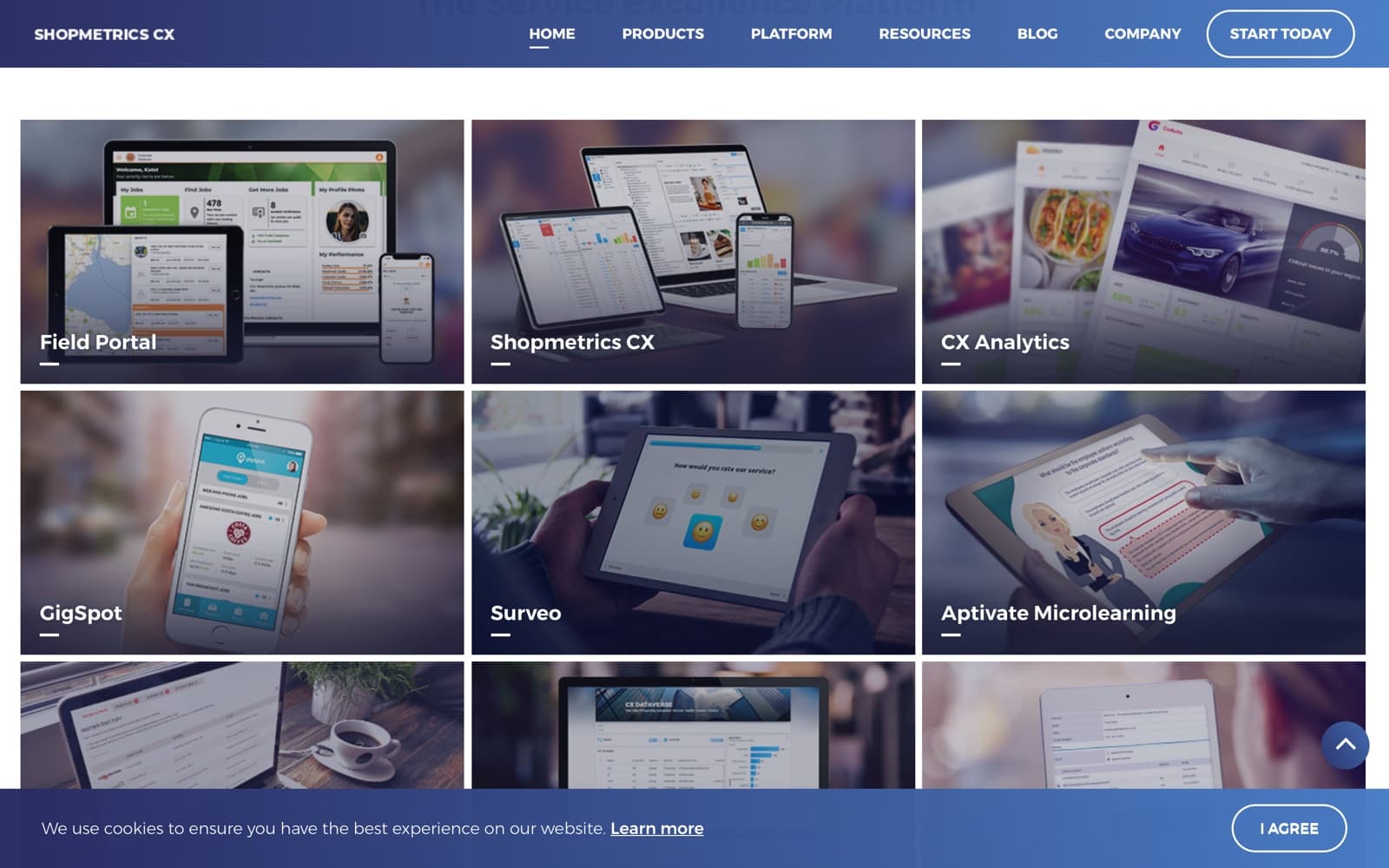
The home page closes on a grid of nine module tiles: Field Portal, Shopmetrics CX, CX Analytics, GigSpot, Surveo, Aptivate Microlearning, Partner Network, Dataverse CX and Actionate Action Management. Each links either to its own page or to an anchor on the platform page, so the grid is the site's real table of contents and its labels have to match the names a customer will meet inside the product.
- 02
Module copy that works twice
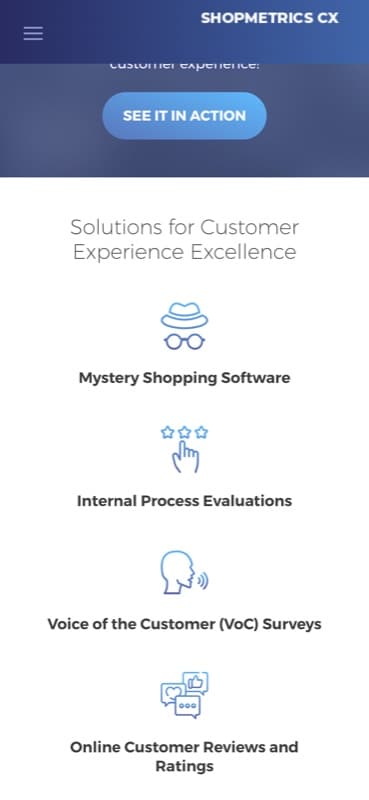
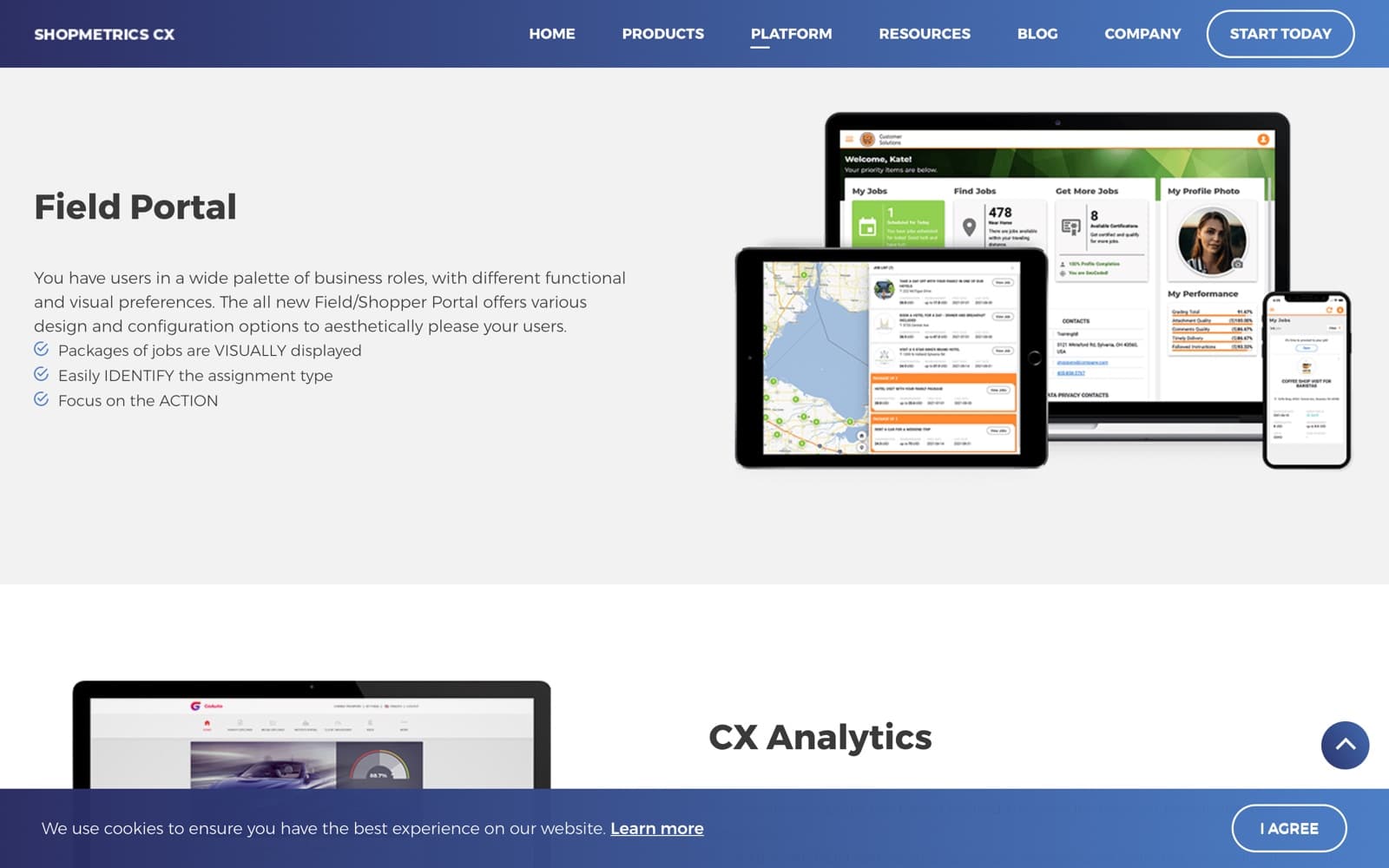
The Products menu points at four solution pages; the platform grid points at anchors in one long stack of ten sections. The same module text therefore has to read as a standalone page and as one section among many, which means no section can lean on the one above it for context.
- 03
Blog records from the platform
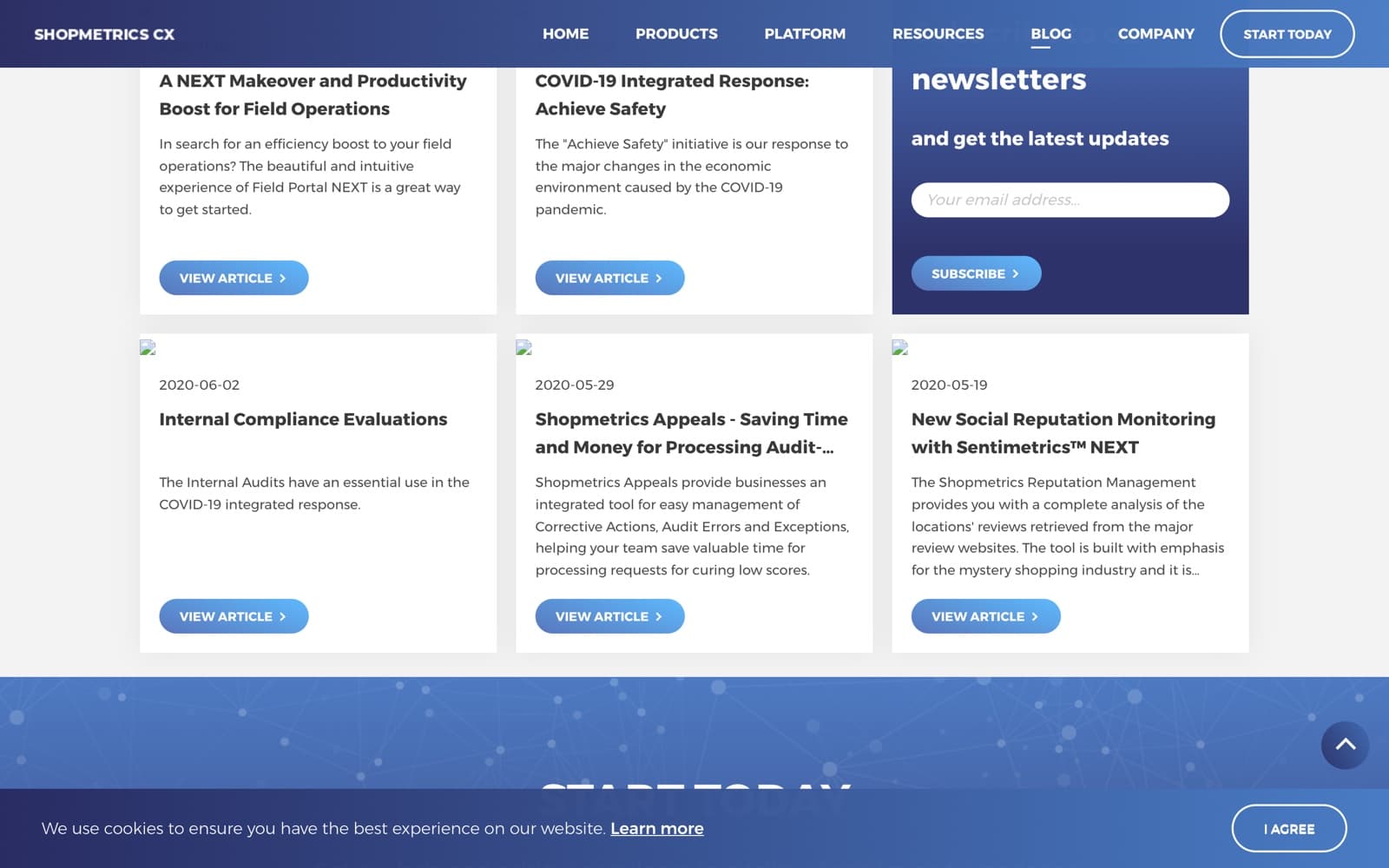
Posts do not come from a blogging tool. They arrive as a typed record set embedded in the page, each record carrying a title, an object name, a subtitle, a summary, a posted date, a visibility value and a summary-image block, and the card grid is assembled from those fields at load.
- 04
One demo form, two round trips
Contact_Us.asp holds the only demo form and every page routes to it. The submit path posts the reCAPTCHA response to Contact_Send.asp for verification first and only then posts the message to the same handler, so the form has to hold its own state across two requests and report either outcome in place.
- 05
Two entities in one footer
Research Metrics LLC in Sylvania, Ohio and Shopmetrics Europe Ltd. in Varna share the footer with the association and partner marks. The block has to read as one company with two addresses, on every page, without a region switch.
The running system
Captures of the live site. The address is in the frame, so you can open it yourself and check that what is shown here is what is actually served.
Why this is on the page
Legacy stacks are not a reason to refuse an account. Classic ASP on IIS runs real revenue for real companies, and the answer is to maintain it properly, not to insist on a rebuild nobody asked for.


Running something that looks like this?
Start with the fixed-fee audit. One to two weeks, a known price, and the findings are yours whether or not you go further. It is the only way to see how a supplier thinks before you have given them the pager.












