
PSYONIC
The site for PSYONIC's Ability Hand, a touch-sensing bionic hand sold to people with limb difference and their clinicians, and to robotics integrators.
- Address
- psyonic.io
- Sector
- Bionics and robotics hardware
- Audience
- Users, clinicians, robotics integrators
- Shape
- Two-route product site
- Platform
- Squarespace 7.1, Fluid Engine
What the work was
The specific changes, not a category. If a line here reads as something any supplier could claim, it should not be on the page.
- 01
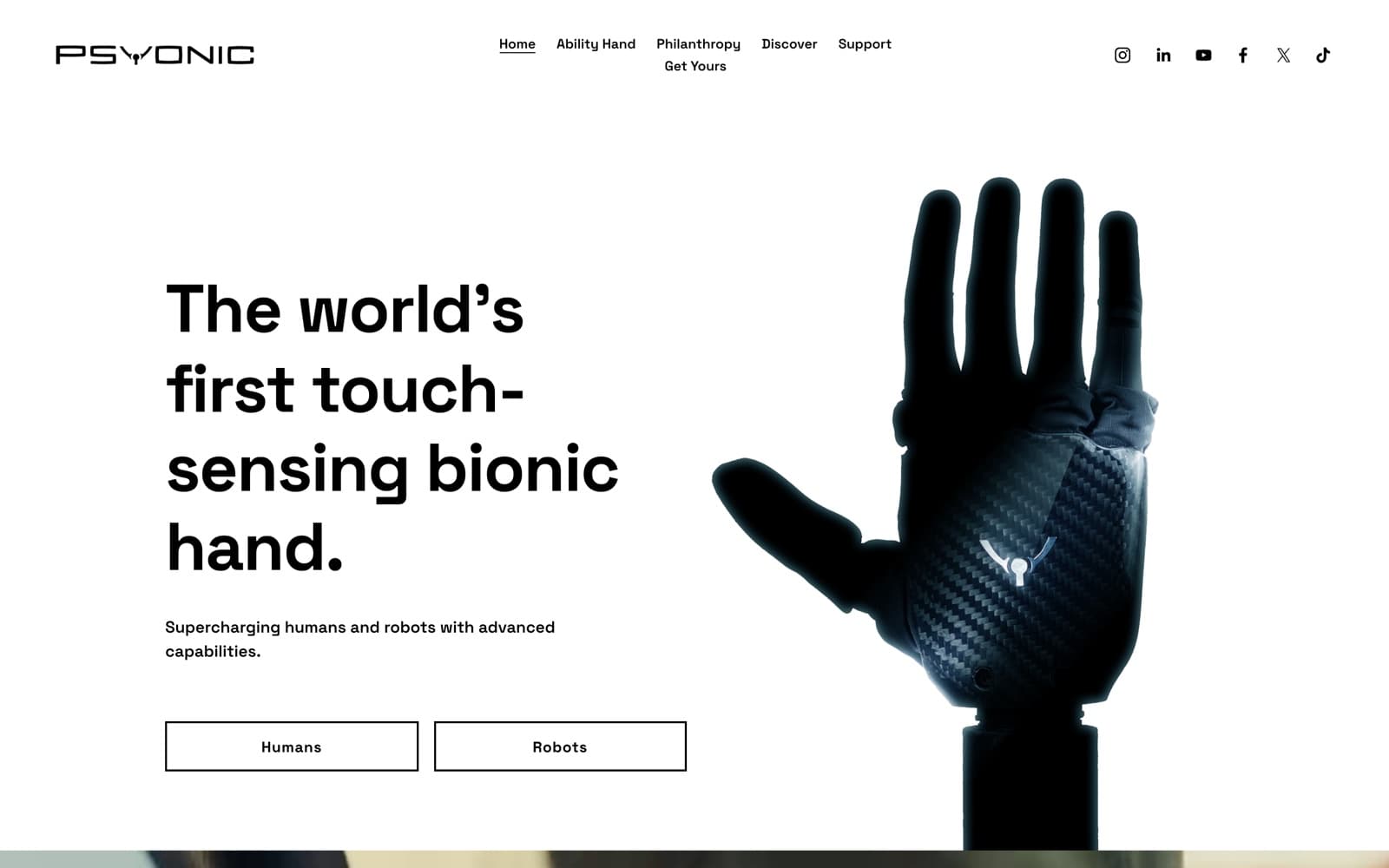
A fork at the front door
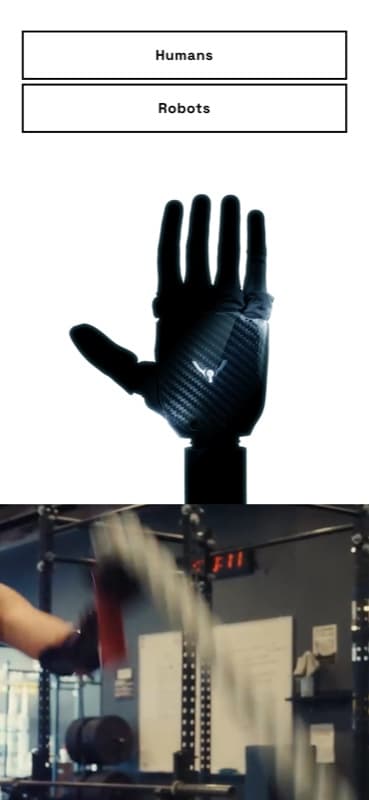
The homepage hero resolves into two buttons, Humans and Robots, and those routes do not meet again until the footer. Everything above the fork therefore has to be a claim about the hardware that both readers accept, rather than a pitch aimed at one of them.
- 02
Two product pages, one device
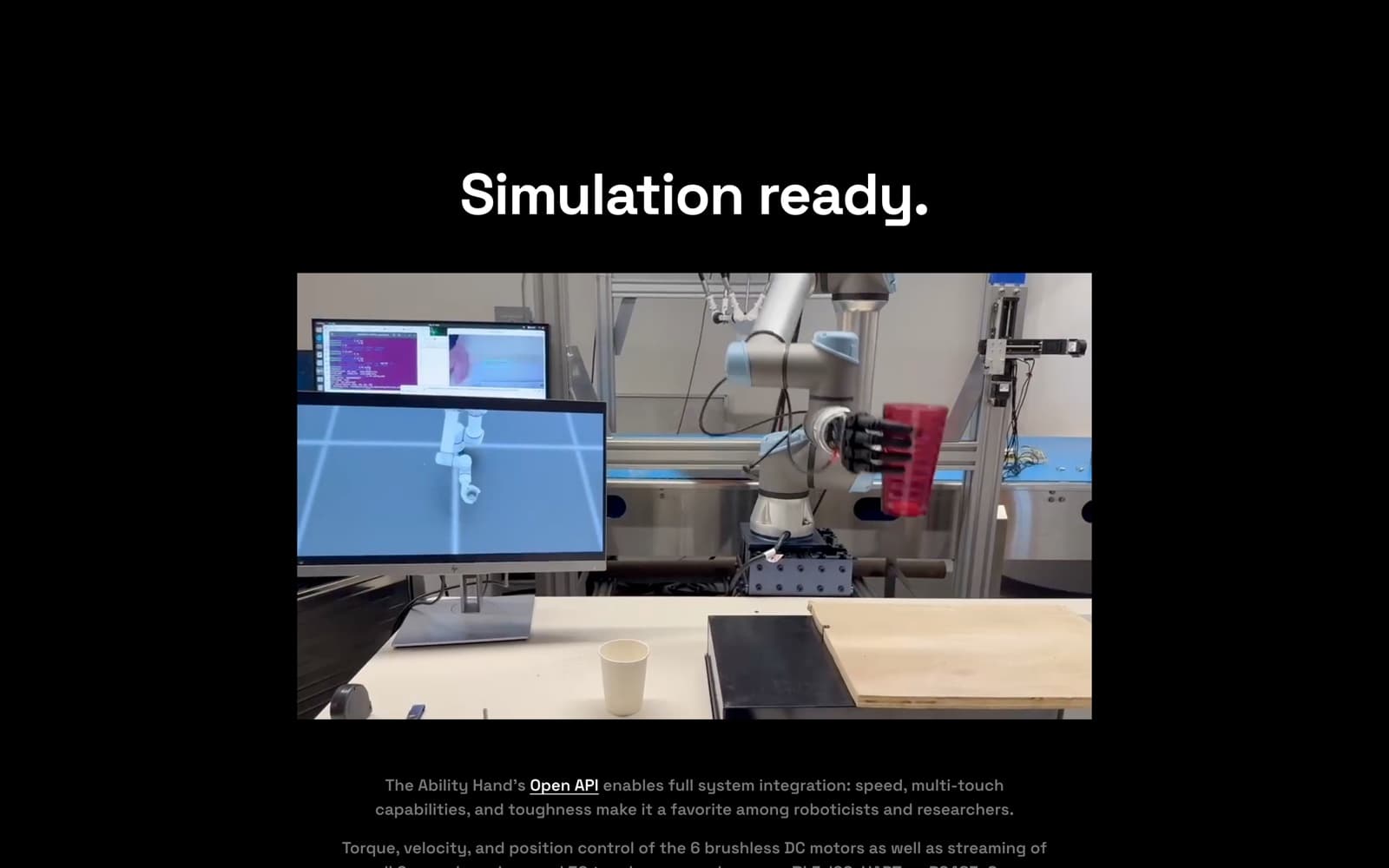
The Humans page carries weight, grip patterns and charge time; the Robots page carries torque and position control, encoder and touch-sensor streams, and bus options. A change to the hardware has to land in both registers without either page drifting away from the datasheet.
- 03
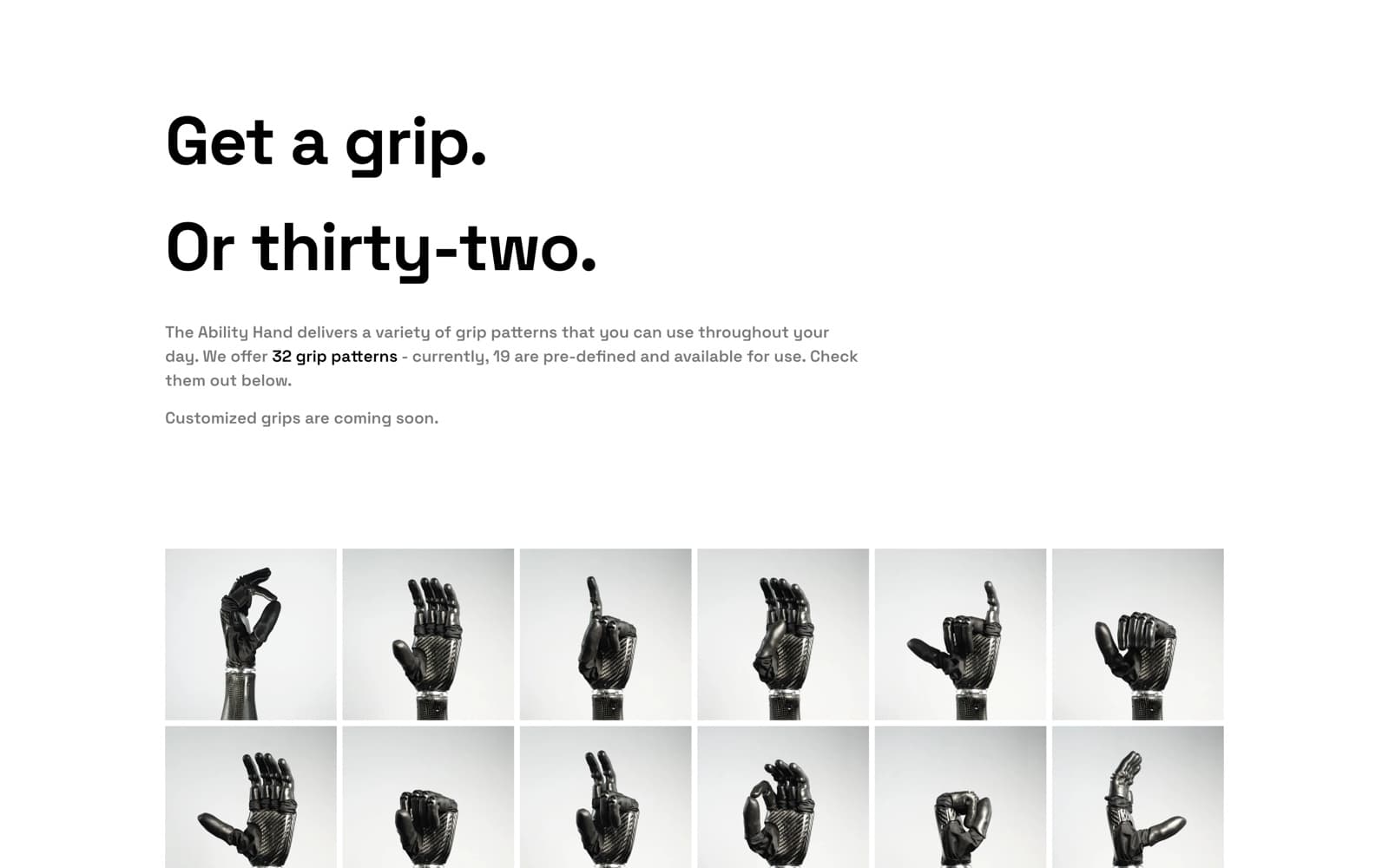
The grip pattern gallery
Under the line about 32 grip patterns, of which the page says 19 are currently pre-defined, sits a photographic grid of the hand holding each position, six across on desktop with each frame opening in a lightbox. It works as a catalogue and as evidence at once, so it has to reflow to a phone without the reader losing which grip is which.
- 04
A quote form that configures
The Request for Quote route is an order sheet rather than a contact box: right- and left-hand quantities, a size choice, a wrist choice between the clinical quick-disconnect and the bolt-pattern research wrist, and an optional teleoperation glove package. The mechanical detail lives in the field hints, down to the bolt count on the wrist and the page of the datasheet that describes it.
- 05
Documents keyed to hardware generation
The clinician and user hubs serve manuals, a spec sheet and fabrication guides as PDFs from the Squarespace file store, split by device generation and identified to the reader by serial-code prefix: Gen 2 starts with A, Gen 1 with 2. Versioning lives in the filename, so each link has to name its document unambiguously enough that a prosthetist picks the right one first time.
- 06
The Learning Center as a book
A numbered eight-part contents page, from limb-loss definitions through amputation levels to control systems, links out to chapters that each sit on their own route and link back to the contents. It is a reference work assembled from flat pages, so the ordering is carried entirely by the contents spine rather than by a collection.
The running system
Captures of the live site. The address is in the frame, so you can open it yourself and check that what is shown here is what is actually served.

Running something that looks like this?
Start with the fixed-fee audit. One to two weeks, a known price, and the findings are yours whether or not you go further. It is the only way to see how a supplier thinks before you have given them the pager.












