
Jim Bramlett
An executive coach's site selling a ten-module leadership programme to business owners and managers, alongside his book and free self-scoring diagnostic tools.
- Address
- jimbramlett.com/courses
- Sector
- Executive leadership education
- Audience
- Owners, executives, managers
- Shape
- Marketing site plus assessment tools
- Platform
- WordPress, custom theme

What the work was
The specific changes, not a category. If a line here reads as something any supplier could claim, it should not be on the page.
- 01
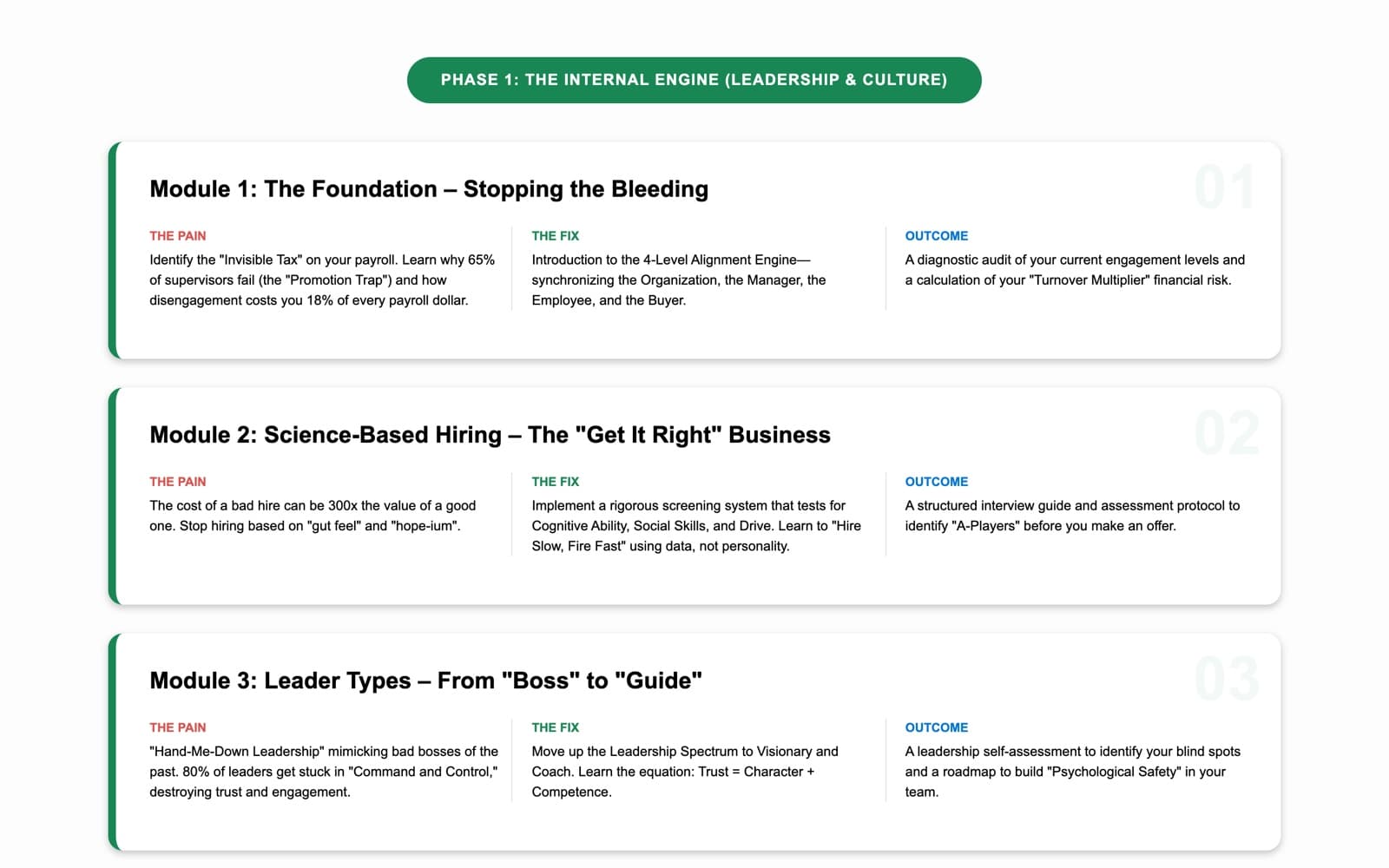
A syllabus that argues module by module
Each of the ten modules carries the same three-part structure: the pain, the fix, the outcome. Holding that shape across every card, on the home page and again on the course page, makes the module the unit of content rather than the page layout, and lets the modules be grouped into phases without rewriting them.
- 02
Three ways into one programme
The course is sold as a free first module, as the full set of ten, and as a discovery call for anyone who cannot choose. The enrolment page has to keep those offers distinct without letting the free one read as the whole product.
- 03
Diagnostics as first-class pages
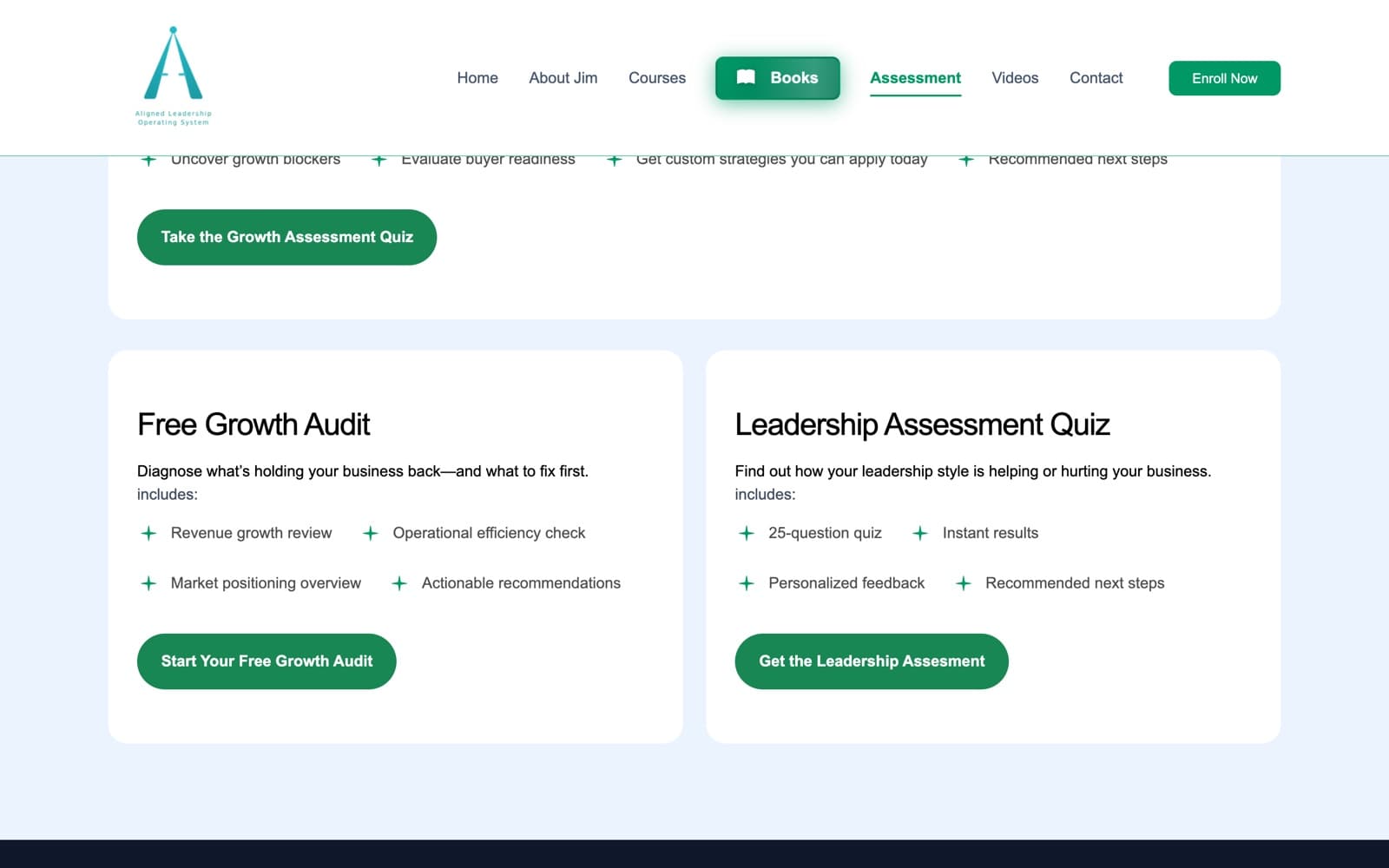
A growth audit and two quizzes each run as their own multi-step interface rather than a form dropped onto a marketing page. The audit asks for an email before scoring begins, so an address is captured whether or not the visitor reaches the end.
- 04
A podcast type, not a blog
Interviews live in a registered `podcast` post type with its own archive and a `podcast_category` taxonomy. That lets one appearance carry a permalink of its own while the same records are pulled onto the about page.
- 05
Lead capture split across two systems
Enrolment and the newsletter run on a HighLevel funnel at a separate subdomain, the book checkout goes to Stripe and the discovery call to Calendly, while site enquiries stay in Contact Form 7 on WordPress. Every call to action has to route to the right one, and the set has to read as a single site.
The running system
Captures of the live site. The address is in the frame, so you can open it yourself and check that what is shown here is what is actually served.



Running something that looks like this?
Start with the fixed-fee audit. One to two weeks, a known price, and the findings are yours whether or not you go further. It is the only way to see how a supplier thinks before you have given them the pager.












