
HeritageBox
A direct-to-consumer digitisation shop where households post in tapes, photos, film and audio and get back originals plus digital files.
- Address
- heritagebox.com/services/vhs-conversion-near-me-new-york
- Sector
- Memory digitisation
- Audience
- US households, mail-in
- Shape
- Catalogue, checkout, landing matrix
- Platform
- React SPA on Vercel
What the work was
The specific changes, not a category. If a line here reads as something any supplier could claim, it should not be on the page.
- 01
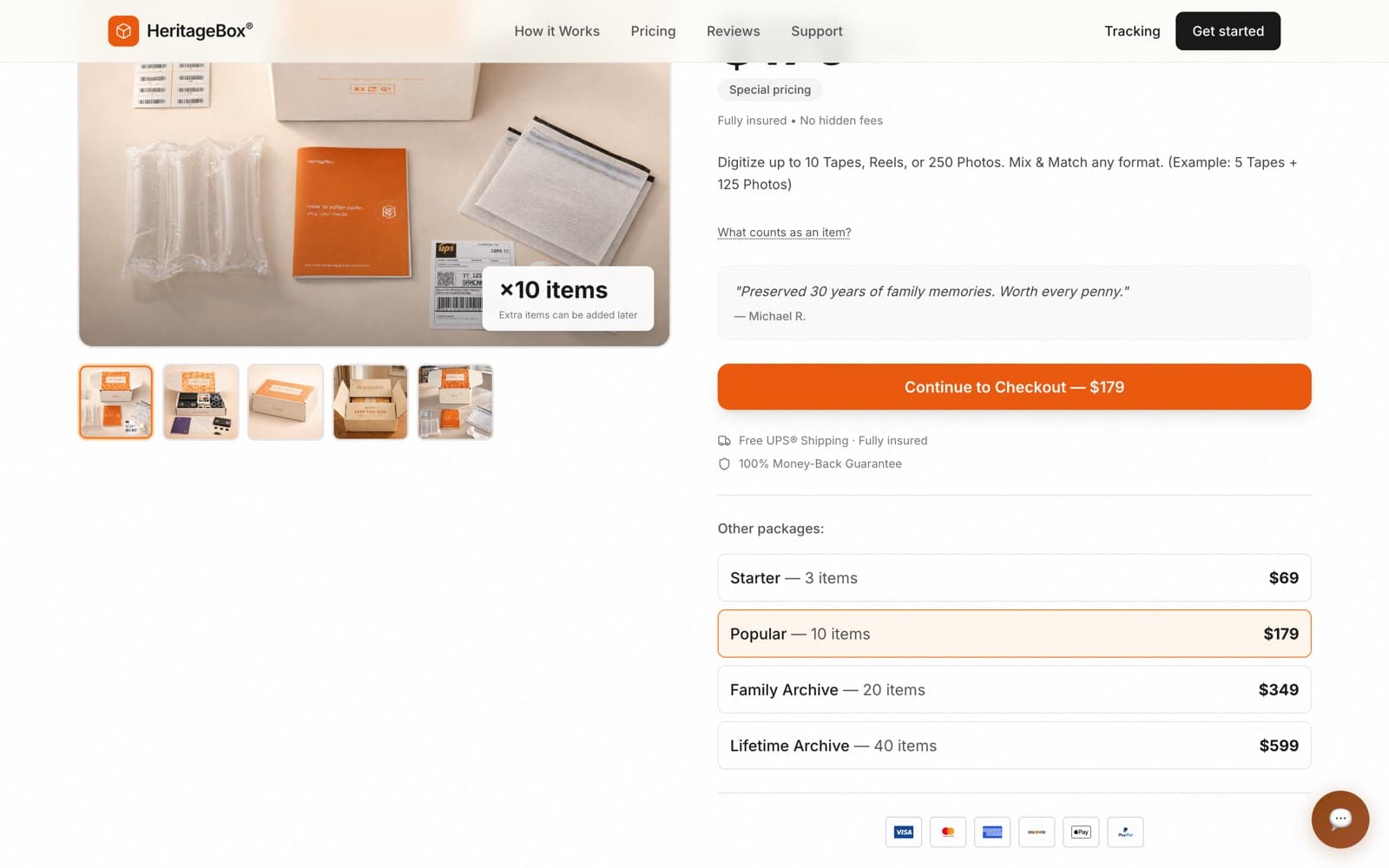
One box sold in four sizes
The catalogue is a single physical product offered at four item counts, and each tier has to explain a conversion between formats: three items means three tapes or seventy-five photos, mixed as the customer likes. That arithmetic has to sit on a card without becoming a table, and the same four tiers reappear inside every format page and again in the order summary.
- 02
A slug that carries three variables
Local pages arrive as one path segment holding an intent, a service and a place, all hyphenated and all of variable length. The parser splits on the connecting word first, then falls back to matching the known service list longest-first and treating whatever remains as the location, so vhs-conversion-near-me-new-york and best-photo-scanning-in-san-antonio both resolve; anything that fails to parse is sent to the products page rather than left as a dead end.
- 03
City records that write the copy
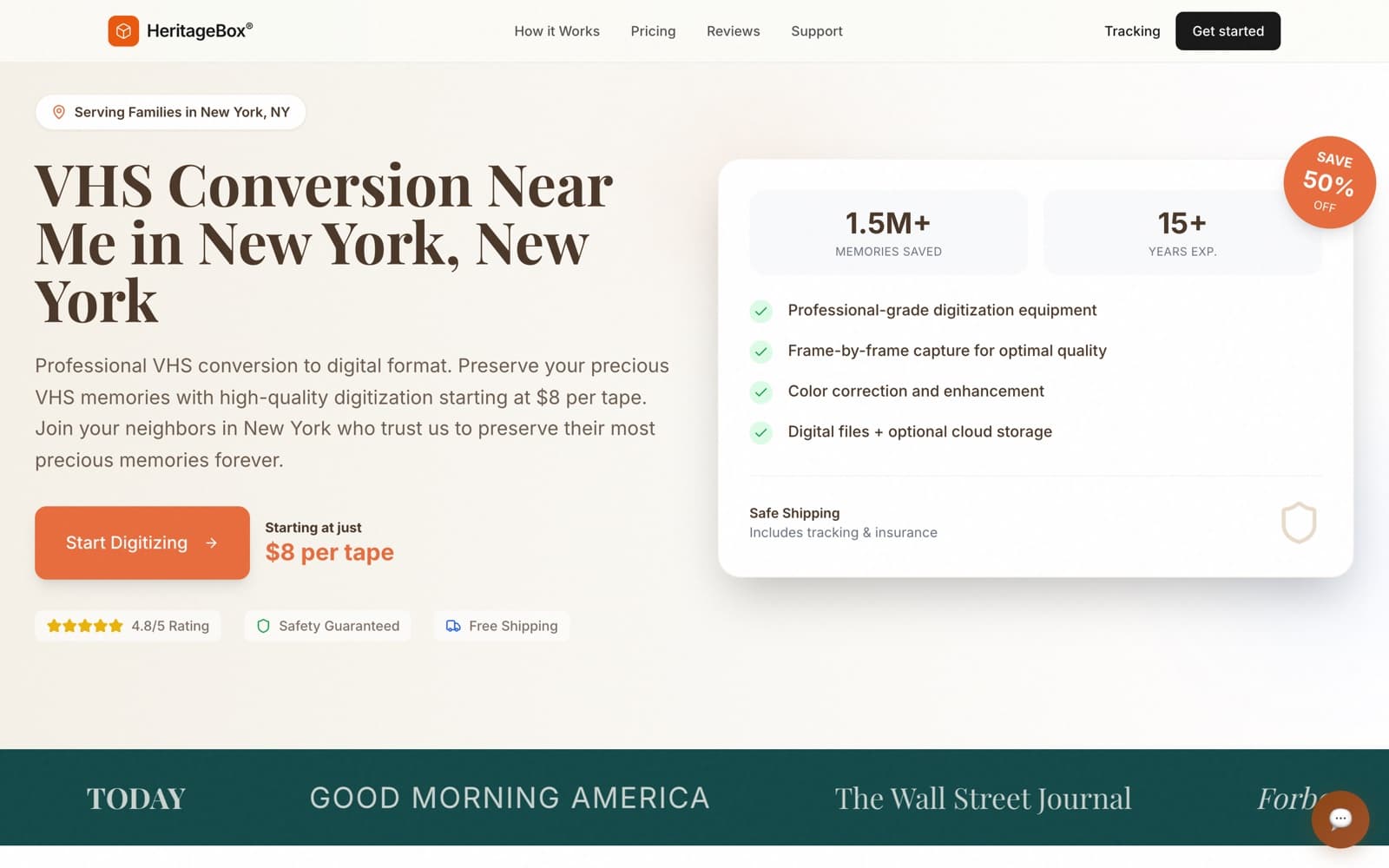
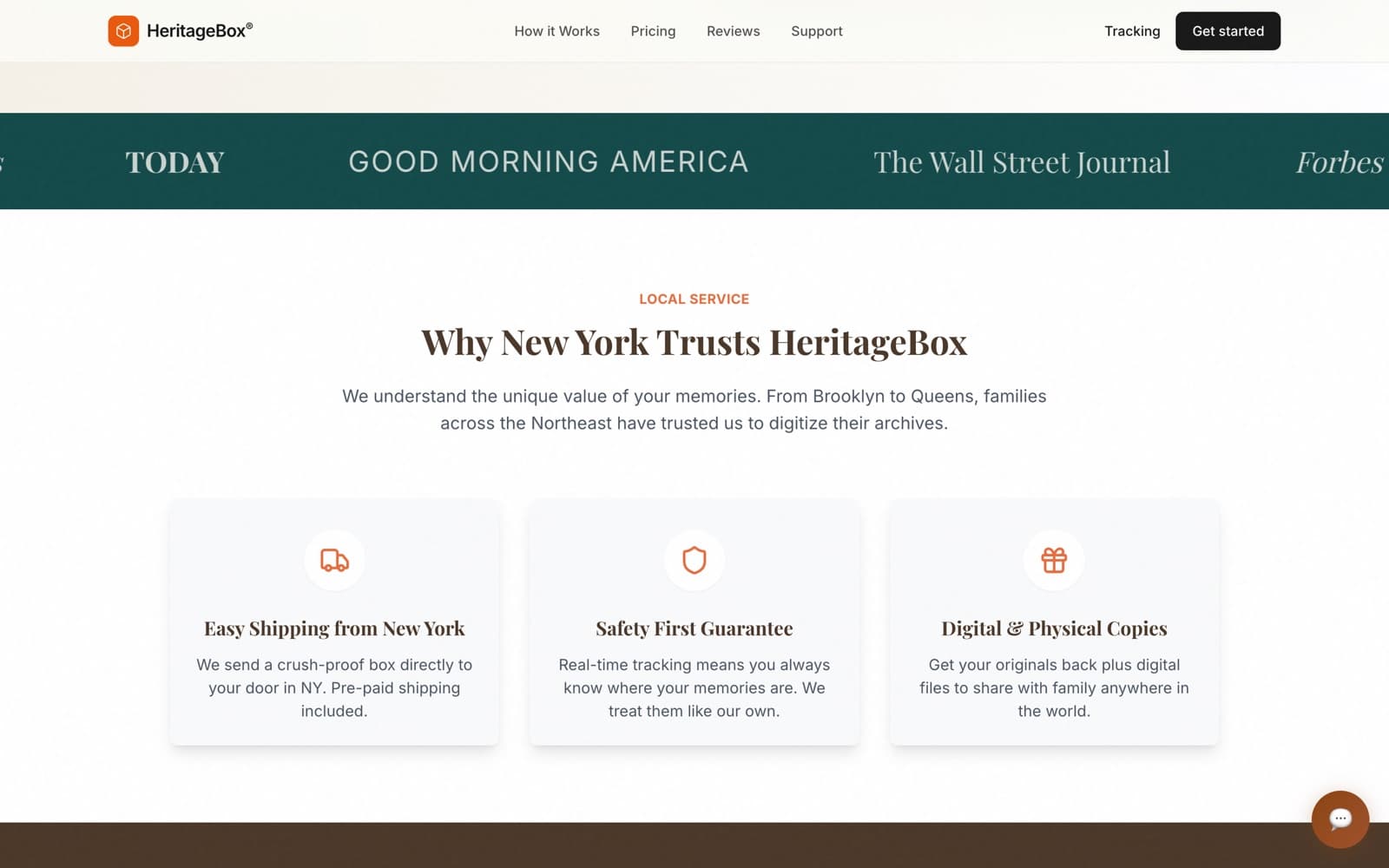
Each of the 210 city records carries a state, a state code, a region, a timezone, a population, a search modifier and a list of nearby areas. The regional sentence, the local trust block and the other-services links are assembled from that one record, which is why a New York page can name Brooklyn and Queens without anyone typing them.
- 04
Checkout that sells time and add-ons
Before payment the order can pick up a turnaround tier, a USB drive on a quantity stepper, and an online gallery that runs free for thirty days and then bills yearly. Payment methods stay shut until the contact and shipping fields validate, so the summary and the total settle before Stripe or PayPal is asked for anything.
- 05
Address entry that fills itself
The shipping form is wired to Google Places, restricted to US addresses, and splits the returned components into street, city, state and ZIP. A guard flag and a capture-phase input listener hold the form's own change handling back while autocomplete writes, so the picker and the fields do not overwrite each other.
The running system
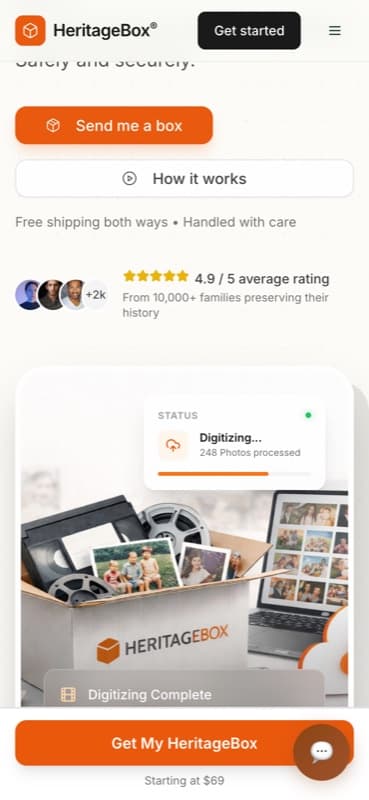
Captures of the live site. The address is in the frame, so you can open it yourself and check that what is shown here is what is actually served.


Running something that looks like this?
Start with the fixed-fee audit. One to two weeks, a known price, and the findings are yours whether or not you go further. It is the only way to see how a supplier thinks before you have given them the pager.












