
Colorado Drywall Supply
A Denver drywall supplier's site: a full materials catalogue, two branch pages, and online credit and employment applications for the contractors who buy from it.
- Address
- coloradodrywall.com
- Sector
- Building materials distribution
- Audience
- Commercial and residential contractors
- Shape
- Catalogue, branches, applications
- Platform
- WordPress, Divi, Formidable Pro


What the work was
The specific changes, not a category. If a line here reads as something any supplier could claim, it should not be on the page.
- 01
A catalogue built for recognition
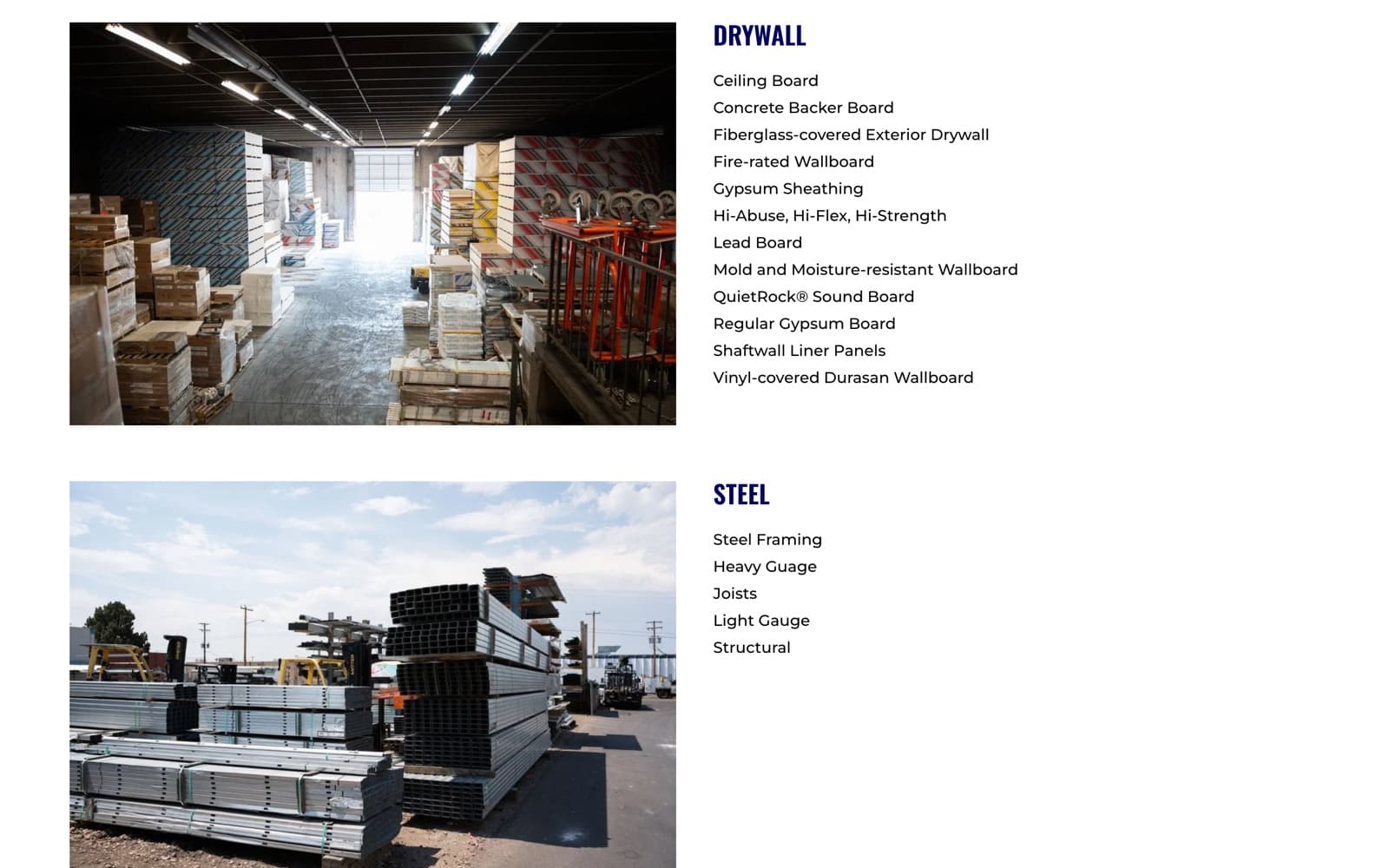
Each material group pairs a photograph taken in the yard with the line items listed by trade name, from QuietRock Sound Board to vinyl-covered Durasan wallboard and shaftwall liner panels. The hard part was keeping it a reference an estimator can scan rather than a shop, since nothing here is bought online.
- 02
Two branches on one page
Contact is tabbed by branch, and each tab carries its own form, address, hours and map. The template had to accept a branch whose hours read as opening soon, so the layout could not assume every field is populated the same way.
- 03
A credit application that branches
The credit form asks for business details, banking and up to three trade references, then splits down one of two paths depending on whether the applicant is a sole ownership or partnership or a corporation, with room for three officers and an upload for a tax exempt certificate. Every branch has to stay valid on its own, because the applicant only ever sees one of them.
- 04
Names on the enquiry route
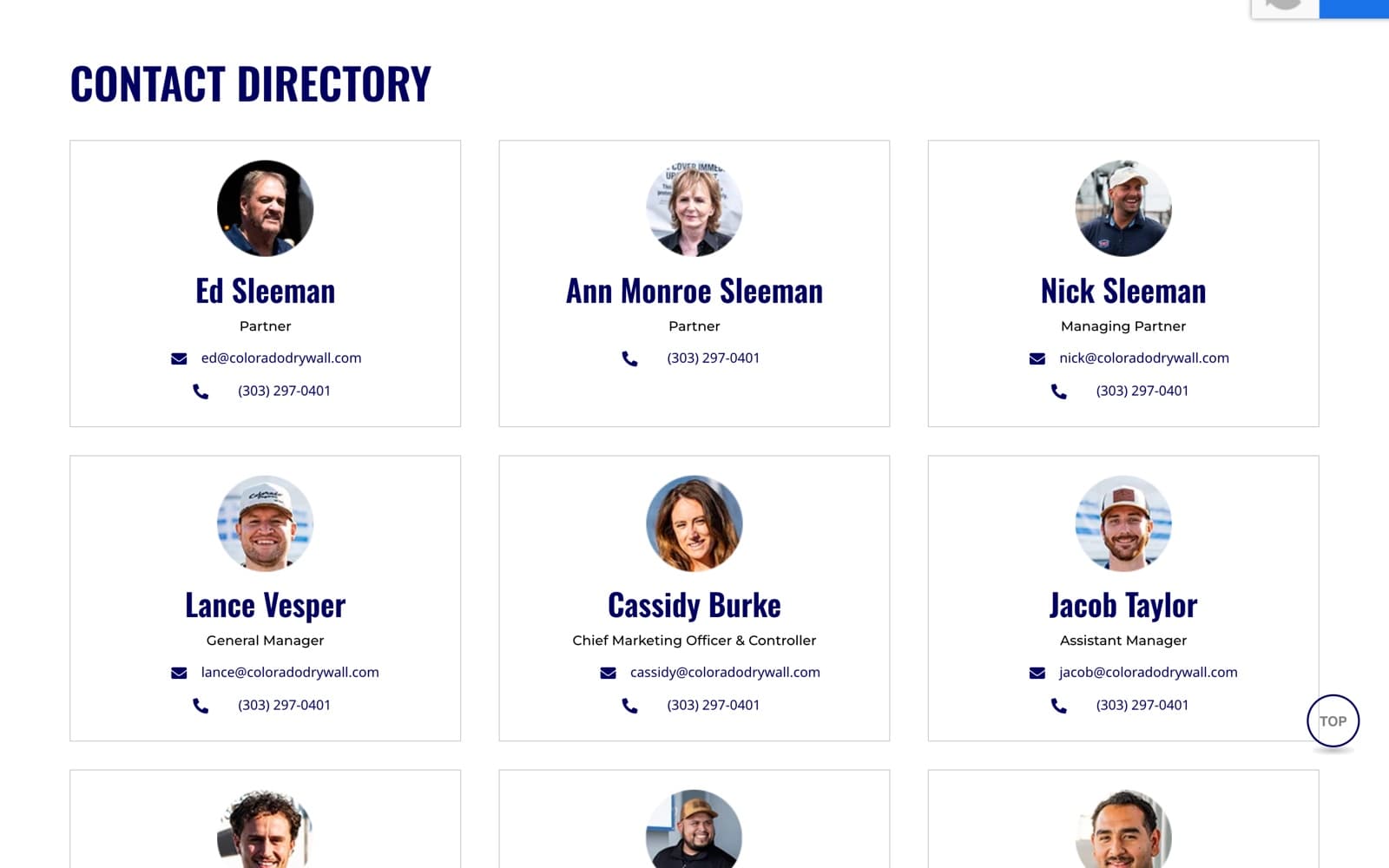
Below the branch tabs sits a directory of people with the product line each one owns: acoustical ceilings, stucco, sales and safety, general management, each with a direct address. An enquiry about ceiling grid can reach the person who orders ceiling grid instead of a shared inbox.
- 05
Press and social in one column
The Media page runs a Divi blog grid of dated press items above a live Instagram feed with a load-more control. Two sources with different update rhythms sit in one column, so the page still reads as current when only one of them has moved.
The running system
Captures of the live site. The address is in the frame, so you can open it yourself and check that what is shown here is what is actually served.





Running something that looks like this?
Start with the fixed-fee audit. One to two weeks, a known price, and the findings are yours whether or not you go further. It is the only way to see how a supplier thinks before you have given them the pager.












