
ChinesePod
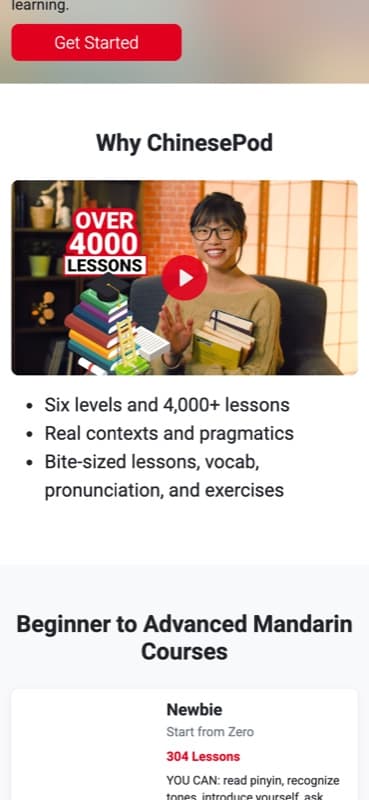
A Mandarin learning service built on a large lesson library, sold to self-paced learners, corporate teams and schools from one site.
- Address
- chinesepod.com
- Sector
- Mandarin language learning
- Audience
- Learners, companies, schools
- Shape
- Marketing site, gated library
- Platform
- Node behind nginx
What the work was
The specific changes, not a category. If a line here reads as something any supplier could claim, it should not be on the page.
- 01
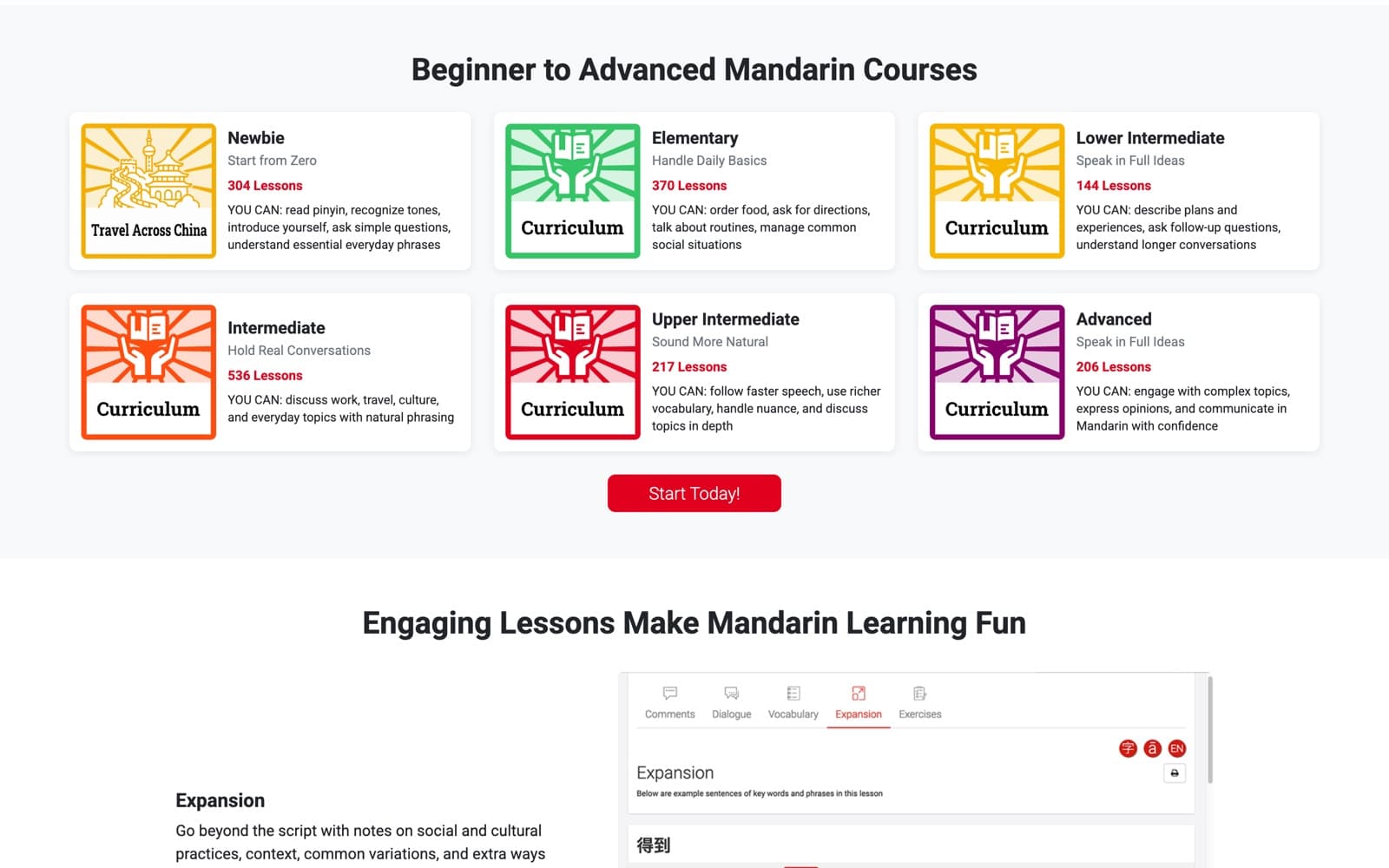
Six levels carrying the catalogue
The level grid is the primary taxonomy and the primary answer to where do I start. Each of the six levels states its own lesson count and a plain statement of what a learner can do at the end of it, so the block works as navigation and as a placement guide at the same time.
- 02
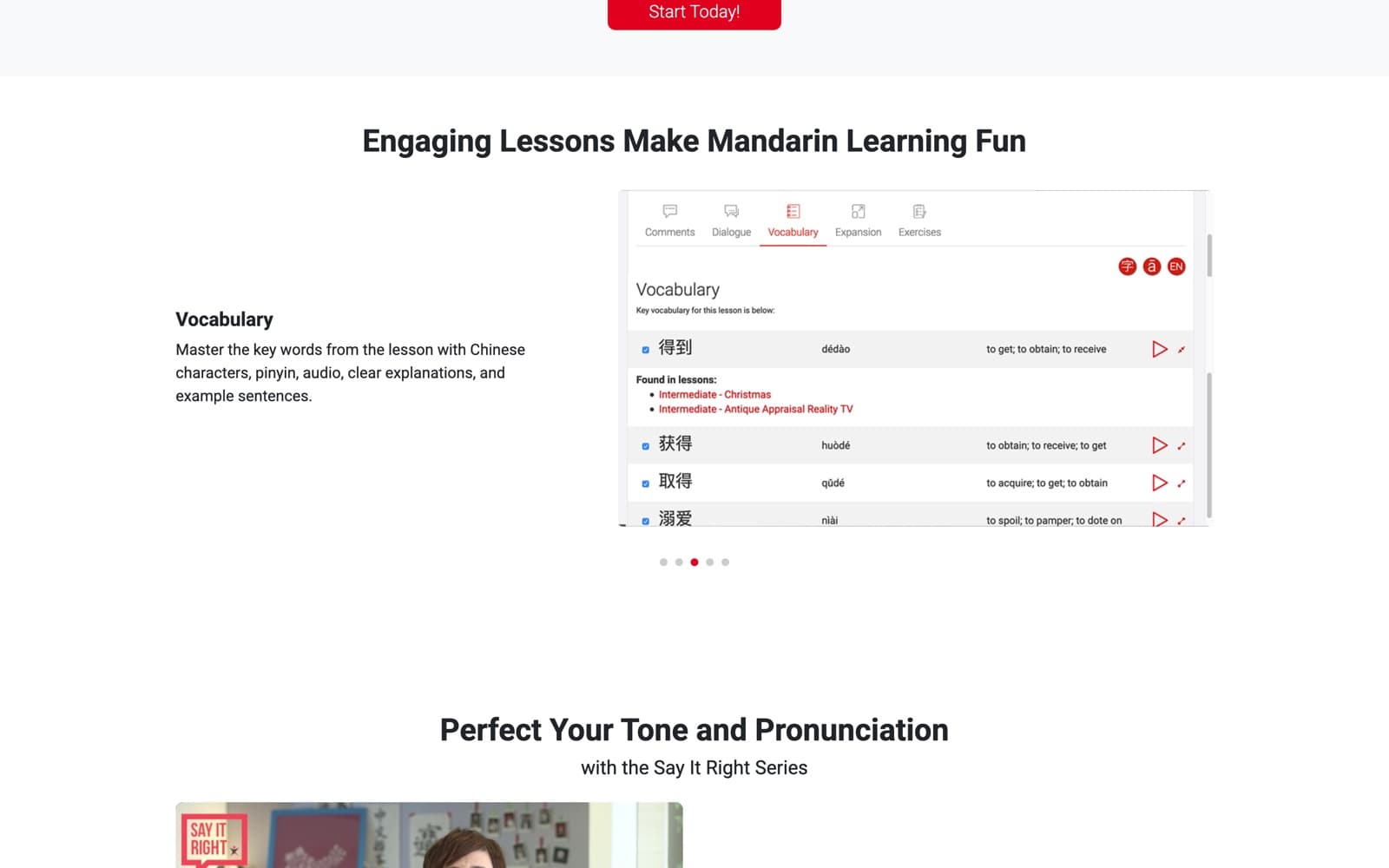
One lesson, five surfaces
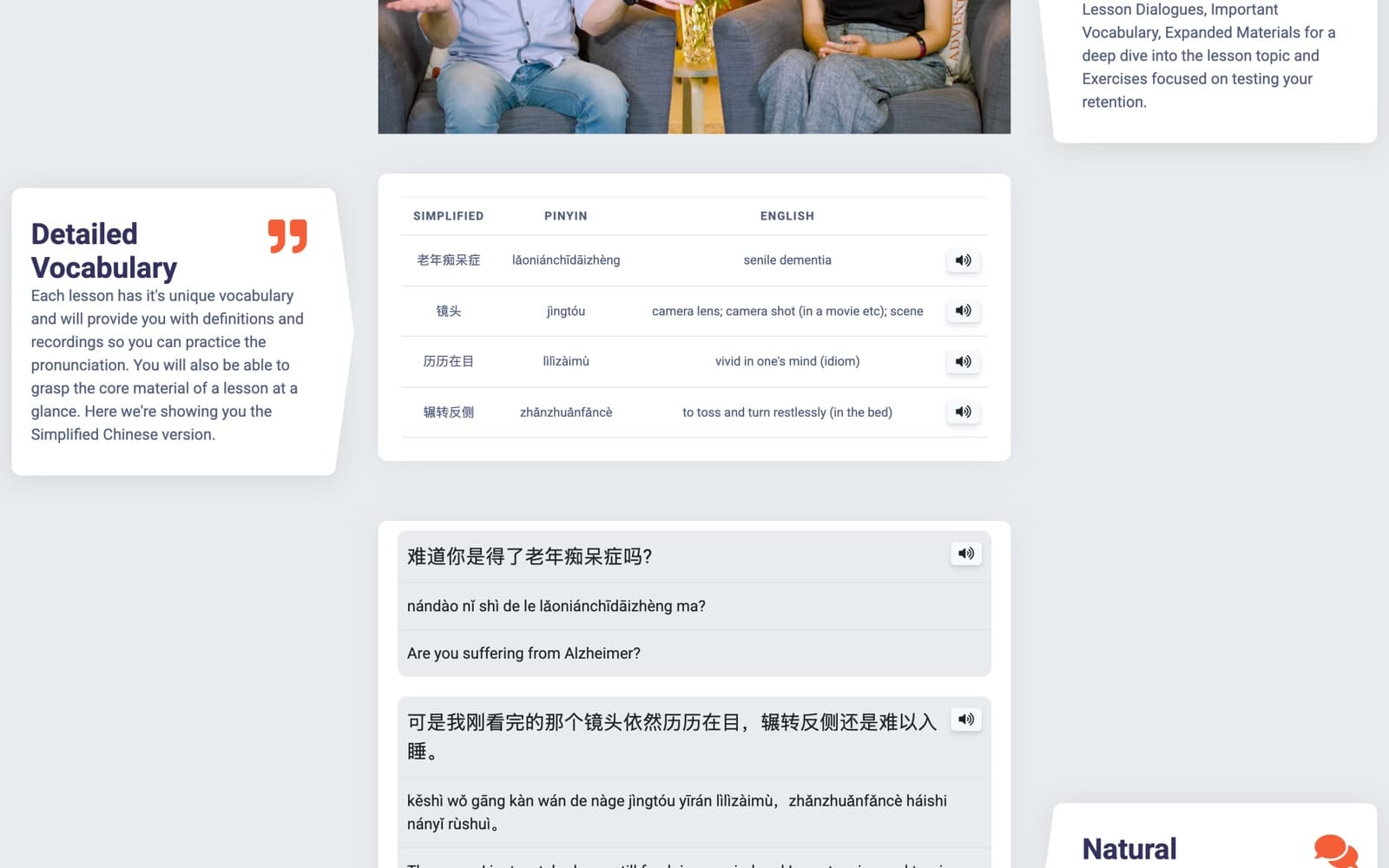
A lesson record feeds a video or audio episode, a dialogue, a vocabulary set, expansion notes and exercises, and the home page carousel shows each of those as a real screen from the product. The same record renders five ways, with characters, pinyin and English toggled independently in each.
- 03
Two institutional lanes
Companies and schools each get a page with their own outcome language and their own quote form, and the required fields differ: learner count and company website on one, student numbers and institution address on the other. Each lane answers to a second URL as well, and the alias returns the same document byte for byte, so a campaign link can point at either name.
- 04
Auth that survives its own history
One client-side component serves signup, login and password recovery, choosing its view from the pathname and recognising the historic URL shapes the site has accumulated, including /accounts/signin, /log-in and /sign-up. It lifts a campaign id from either a signup path segment or a query parameter into a cookie, and it answers an existing-account response inline by offering recovery rather than throwing an error.
- 05
One price, three conversations
The pricing page carries a single priced learner plan beside three cards that resolve to a conversation rather than a number: teams, education, and a sample account. Those three have to sit level with a priced card without pretending to be one, which is what keeps the row readable.
The running system
Captures of the live site. The address is in the frame, so you can open it yourself and check that what is shown here is what is actually served.
Why this is on the page
Most infrastructure we take over is like this: years of accumulated behaviour that works, that nobody documented, and that a rewrite would quietly break. Reading it is the job.
Running something that looks like this?
Start with the fixed-fee audit. One to two weeks, a known price, and the findings are yours whether or not you go further. It is the only way to see how a supplier thinks before you have given them the pager.












